
Chat tab model moves to 6.2, starting with 4 plans including Plus
OpenAI on Nov. 23 (Nov. 24 Japan time) began rolling out a version of its new model "GPT-6.2 Sol" in the "Chat" tab, ChatGPT's regular conversation screen. The version is tuned for everyday conversation and is rolling out globally from the same day to users on the paid Plus and Pro plans and the business-oriented Business and Enterprise plans. The company said it is better at handling complex requests that involve detailed instructions and questions that require finding information online.
ChatGPT's official account announced the rollout at 4:04 a.m. Nov. 24 Japan time. The post listed three improvements users might notice in everyday chats: picking up finer details in photos, narrowing down options when comparing them online, and judging when to offer a follow-up.
We’re rolling out a version of GPT-6.2 Sol in the Chat tab, optimized for everyday conversation. It’s much better at handling complex requests, especially when you give it detailed instructions or ask it to find information online. A few improvements you might notice in everyday chats: - It picks up on finer details in photos, like text on a label or symbols on a sign. - When you’re comparing options online, it does a better job of narrowing them down based on what matters to you, like price or location. - It has a better sense of when to offer a follow-up, like asking if you’d like a heads-up when a price drops. Rolling out today to Plus, Pro, Business, and Enterprise users.
GPT-6.2 Sol is the model for everyday work that OpenAI released on Nov. 17 (Nov. 18 Japan time) alongside its top model, "GPT-6.2 Astra." At that time it was offered in "ChatGPT Work," a feature for delegating tasks, in the AI coding tool "Codex," and in the API for developers, and it was not part of the regular conversation screen (ORIENS reported earlier). The latest release notes say that GPT-6.2 in ChatGPT is powered by a version of GPT-6.2 Sol for Plus, Pro, Business and Enterprise and is tuned for everyday conversation.
OpenAI says internal scores rose for images, instructions and web search
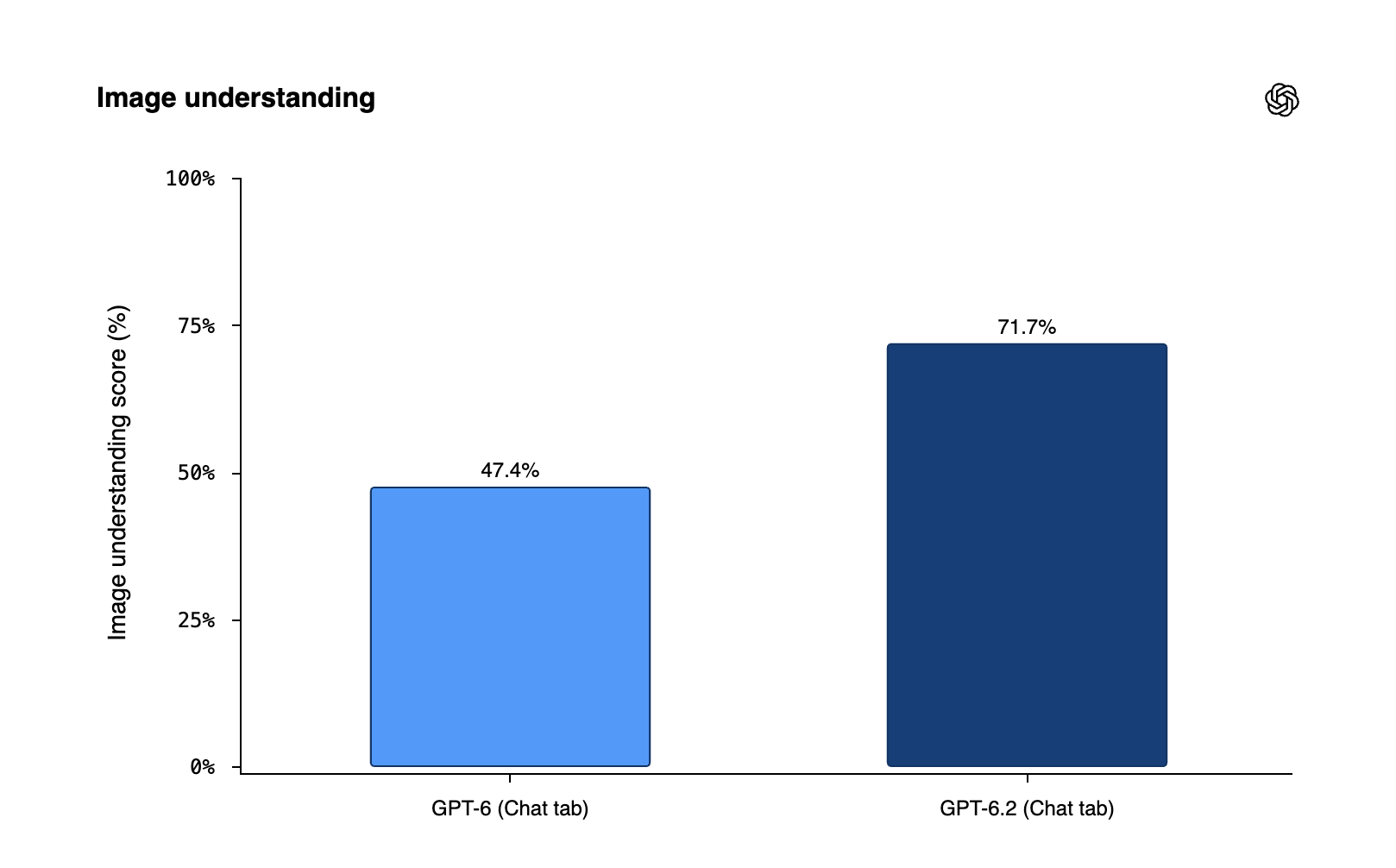
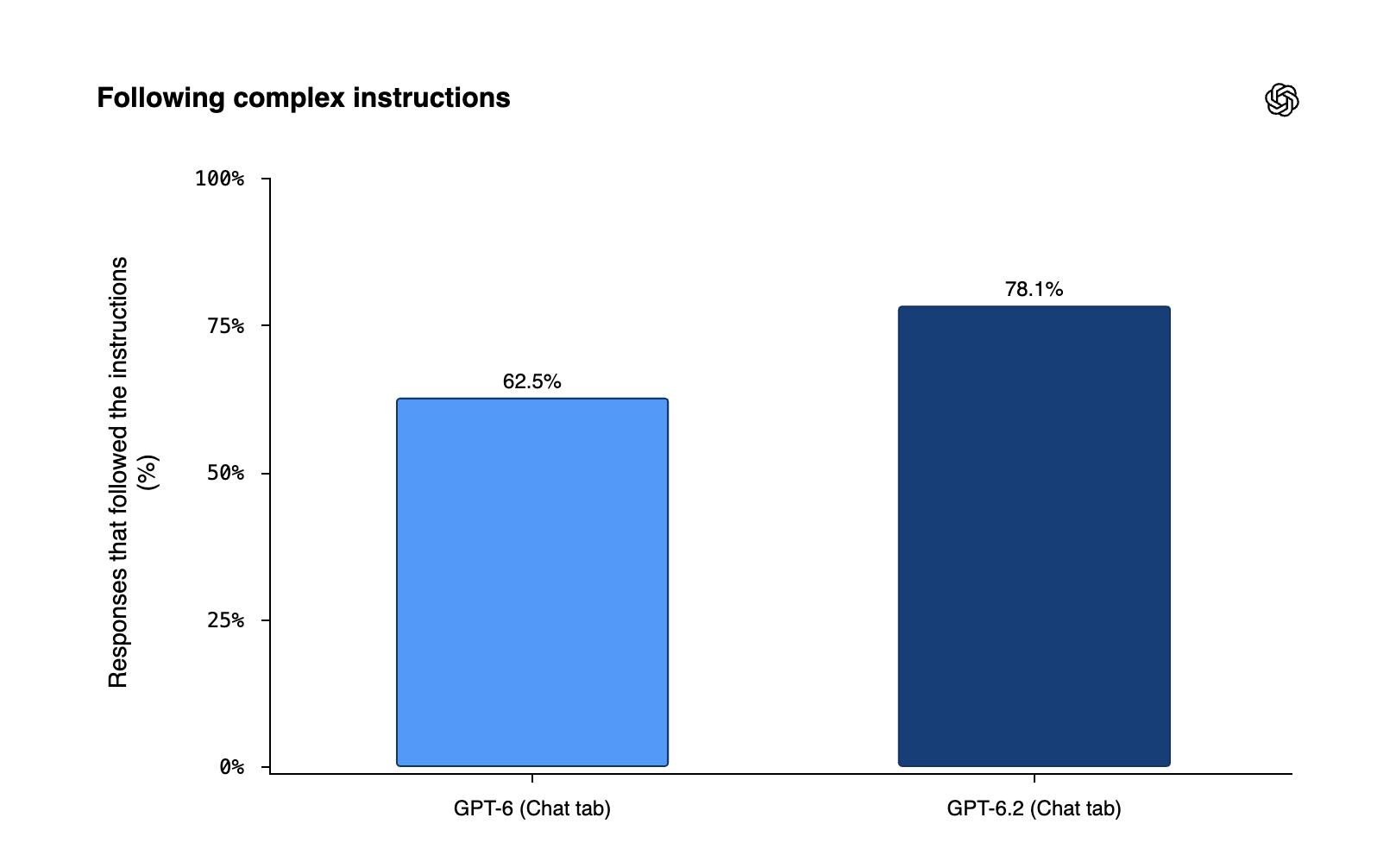
The release notes include internal evaluations comparing the model with "GPT-6," which was previously used in the Chat tab. In an evaluation of answering questions about shared images, GPT-6.2 scored 71.7%, above GPT-6's 47.4%. On especially challenging prompts, the share of responses that followed instructions rose to 78.1% from 62.5%, according to the company.
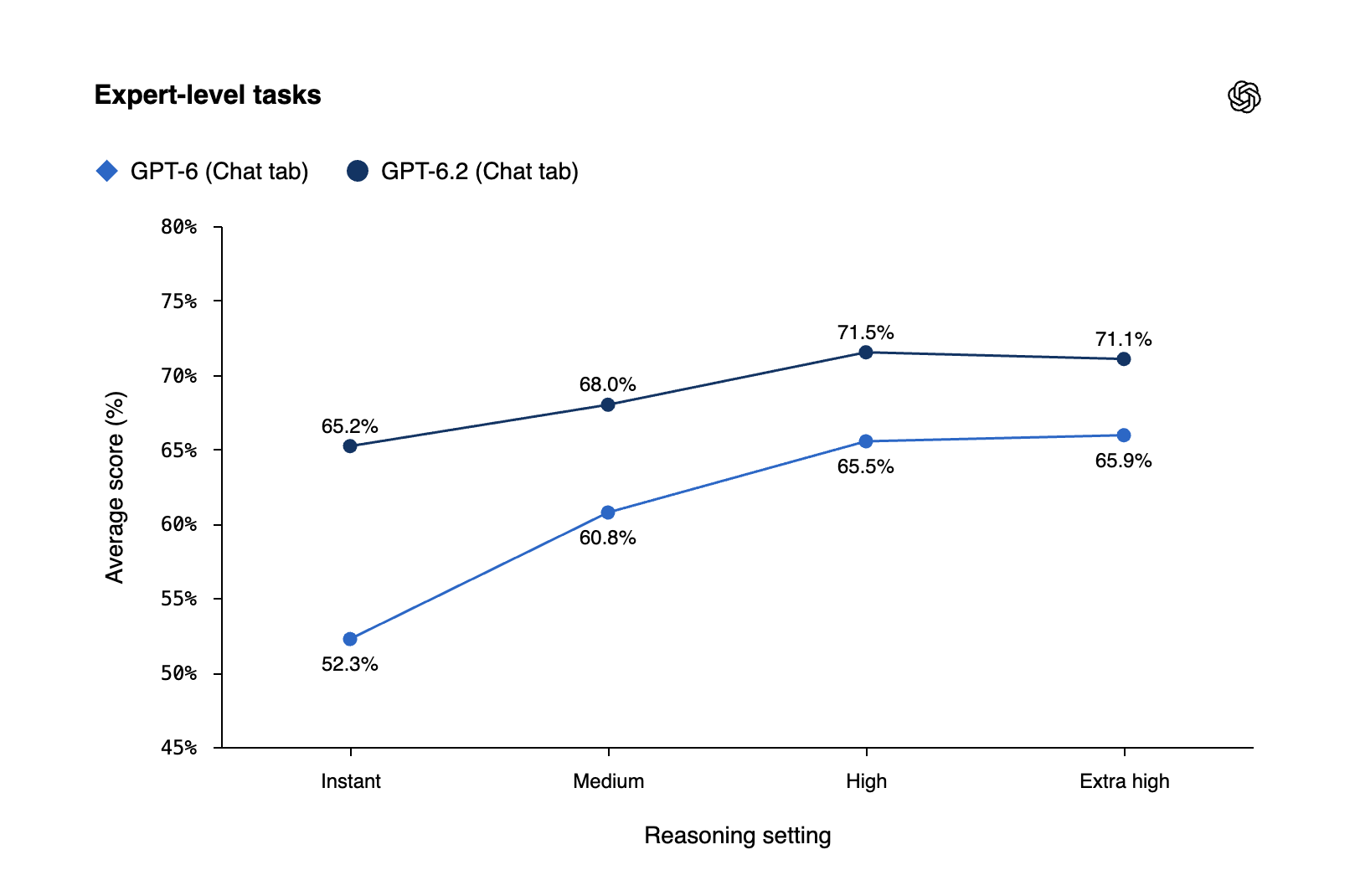
On an internal evaluation of expert-level tasks, the company said GPT-6.2 scored 65% at the lowest reasoning setting it tested, compared with 52% for GPT-6. In the chart, the scores were 65.2% and 52.3% at the lightest setting, "Instant," and 71.1% and 65.9% at the deepest, "Extra high."
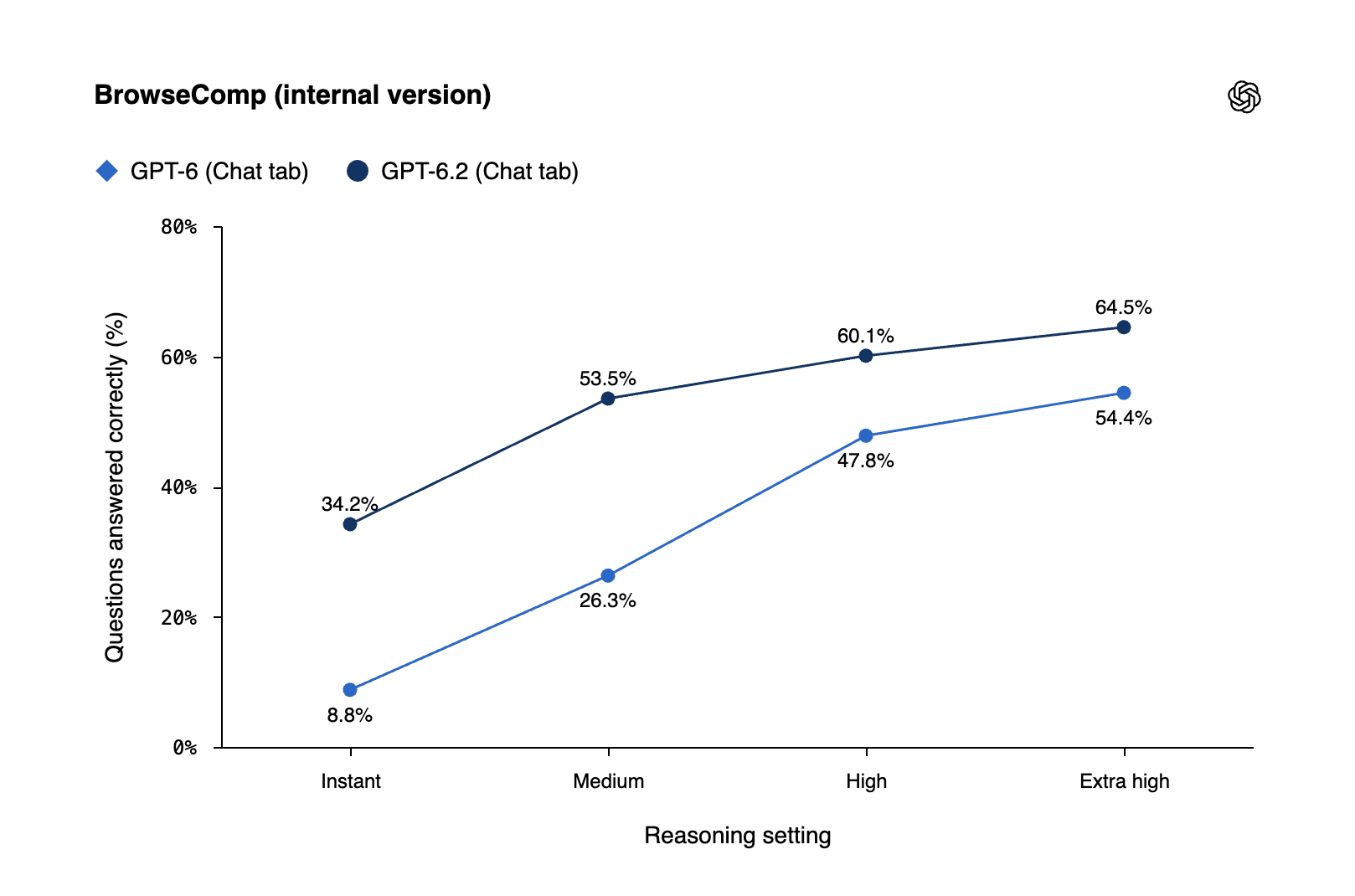
The ability to find answers to difficult questions on the web was measured with an internal version of the public benchmark "BrowseComp." GPT-6.2 outperformed GPT-6 at all four reasoning settings, and at Extra high it scored 64.5%, about 10 percentage points above GPT-6's 54.4%, according to the company. The chart shows the largest gap at Instant, where GPT-6.2 scored 34.2% against GPT-6's 8.8%.
The only comparison is with the company's previous model, and no comparison with other companies' models is given. All figures are OpenAI's internal evaluations, and because the BrowseComp figures come from an internal version, they cannot be compared with public leaderboards. No third-party verification has been presented.
The release notes also give an example of use. When comparing hotels for a weekend trip, the model can weigh trade-offs such as price and location and recommend the one that best fits the user's priorities, the company said. If a user asks whether something is on sale, ChatGPT can offer to let them know when the price drops.
OpenAI also reports improved teen safety evaluations
OpenAI said GPT-6.2 showed significantly improved performance on its teen safety evaluations. The largest gains were in emotional reliance, disordered eating, and age-restricted goods, services and dangerous activities, according to the company.
In evaluations of policy compliance in challenging conversations, responses met the company's safety policies 91% to 94% of the time, up from 77% to 80% for GPT-6, it said. Details are in the system card, according to OpenAI.
Available on 4 paid and business plans; Work and Codex models unchanged
The rollout covers ChatGPT Plus, Pro, Business and Enterprise and is expanding globally from the same day. Availability on Enterprise depends on workspace admin settings.
The change applies only to the Chat experience in ChatGPT, and the models powering ChatGPT Work and Codex are not changing. Neither the post nor the release notes mention any change in pricing or usage limits.
The free "Free" plan and the low-cost "Go" plan do not appear in the latest entry. When GPT-6 came to the Chat tab on Oct. 7, OpenAI said Plus and the other paid plans used GPT-6 Sol, Free and Go used "GPT-6 Luna," and the "Pro" reasoning option continued to use GPT-6 Astra. The latest entry does not say whether the models for Free and Go or the Pro reasoning option will change.
From leak to the conversation screen in less than a month
On Nov. 1, "gpt-6.2-astra" appeared in Codex usage logs (ORIENS reported earlier). On Nov. 4, The Information reported that new Astra and Sol models could be released soon, and on the same day a leak claimed the two names had appeared on Google Cloud (ORIENS reported earlier, follow-up).
OpenAI officially released Astra and Sol on Nov. 17, and six days later extended a version of Sol to the Chat tab.
- GPT-6 comes to the Chat tab. Plus and other paid plans use GPT-6 Sol, Free and Go use GPT-6 LunaOfficial
- "gpt-6.2-astra" appears in Codex usage logsLeak
- The Information reports the release of new Astra and Sol models is nearReport
- Two leakers post that "gpt-6.2-astra" and "gpt-6.2-sol" appeared on Google CloudLeak
- GPT-6.2 Astra and Sol released in ChatGPT Work, Codex and the APIOfficial
- A version of GPT-6.2 Sol tuned for everyday conversation starts rolling out in the Chat tabOfficial


